
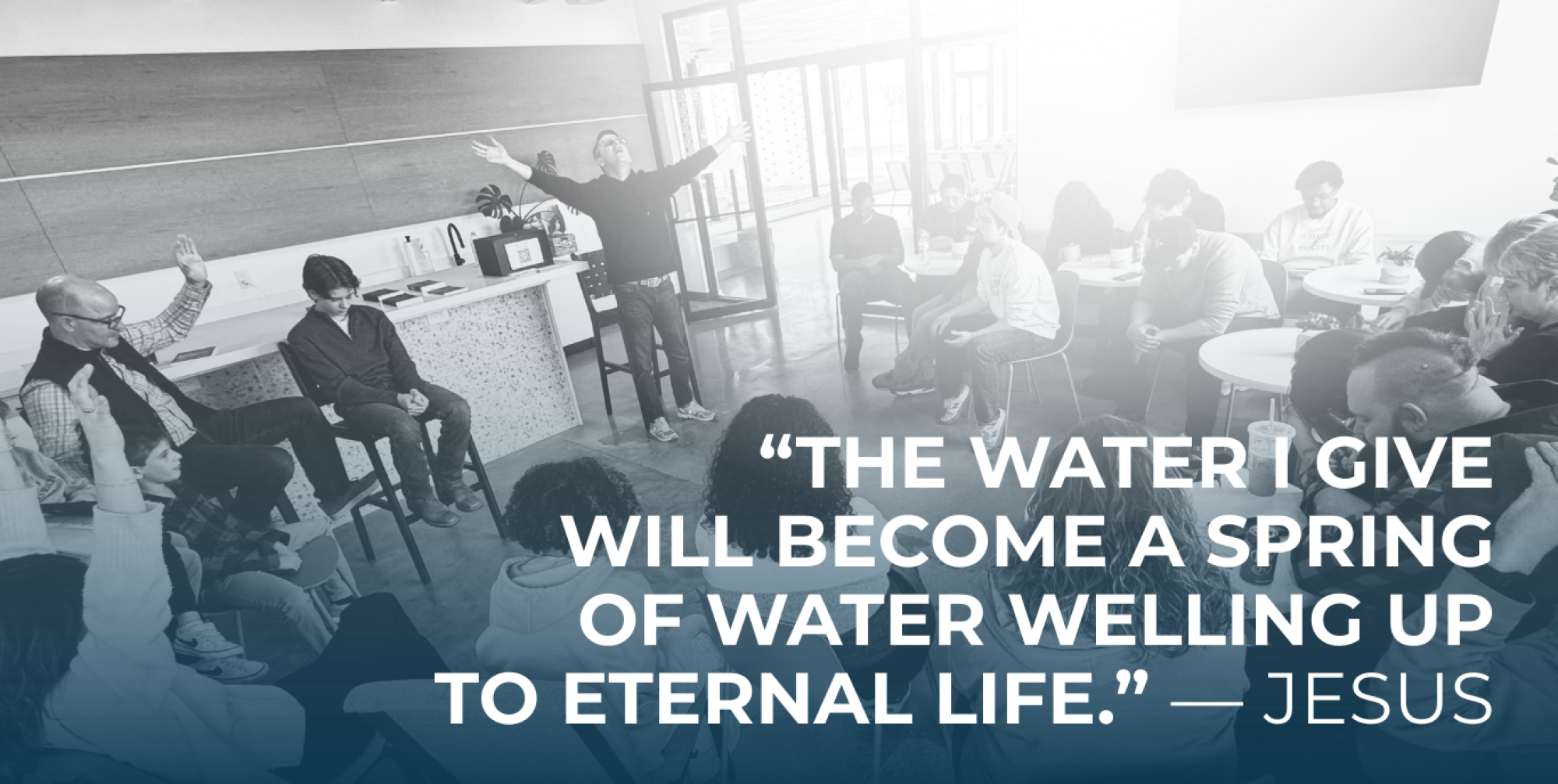
Jesus said (TPT), “I am His messenger and He is always with Me, for I only do that which delights His heart.” Jesus only does that which pleases His Father. He always lives and operates in the Father’s pleasure.
I remember when the Lord gave me a vision and spoke to me about how much pleasure I bring to Him. I’m reminded of that daily, and it is one of the driving desires of my life. I want to live for and from the pleasure of my Heavenly Father. There is wonderful pleasure in His presence, and there is wonderful pleasure in the things we do in faith.
Now Jesus is sending you as His messenger to continue doing Father’s delight. And Jesus says (Matthew 28:20), “I will be with you always.” Put your hand on your chest and declare, “I am His messenger and He is always with me, for I only do that which delights His heart.” Everything we see Jesus do and say comes from the place of Father God’s approval. Do you want to know what pleases God? Look at Jesus.
What are some things we see Jesus do?
All of our practices and traditions do not save us but are meant to show us where God’s pleasure is and increase our knowing intimacy with him. They include aspects of our surrender and they include practical illustrations of who God truly is and what He has done for us. They are continual memorials and learning opportunities. But in the doing, we must not forget the foundation: Father’s pleasure.
I want to share with you two practices that Jesus Christ initiated all the way back in Genesis, were reinforced by Jesus in the New Testament, and are continual practices in our relationship with Yahweh. We’re going to go to the very first book of the Bible, Genesis. Turn to Genesis chapter 14.
Christophany is a visible manifestation of Christ before His human birth. John 1:18 says, “No one has ever seen God. But the unique One, who is himself God, is near to the Father’s heart. He has revealed God to us.” This is talking about Jesus. No one has ever seen God, but throughout the Old Testament, we see God meeting with humans. God is revealed to us through Jesus Christ, who was with God and is God. The experiential manifestation of Yahweh is Yeshua (Yeshua means “Yahweh Saves” and is the original Hebrew name of Jesus). When people see God in the Old Testament, they are experiencing a pre-human manifestation of Jesus. Also, when people heard God, they were hearing Jesus. That’s why Jesus is called the Word.
When you see the specific title “Angel of the Lord”, you can assume this is a Christophany. He is not one of the regular spiritual beings we refer to as angels because He often refers to Himself as the Lord.
- In Genesis 16, the Angel of the Lord meets with Hagar, and she says, “You are the God who sees me. Have I truly seen the One who sees me?”
- In Genesis 18, three men meet with Abraham; two are regular angels and the third is a Christophany. He is repeatedly referred to as the Lord.
- In Genesis 32, Jacob wrestles with God —this is Christophany. Jacob wrestled with Christ. Spoiler alert… Christ won. He dislocated Jacob’s hip, but Christ gave him a consolation prize by blessing him and changing his name from Jacob the heel grabber to Israel the God wrestler.
- In Joshua 5, Joshua encounters the Commander of the heavenly armies. Unlike Jacob, Joshua’s first instinct isn’t to tackle the giant heavenly being. He instead throws himself on the ground. When people encounter an angel in the Bible, if they fall to their faces and worship him, the angel quickly corrects them saying, “Don’t do that! I am a servant of God like you.” Yet when Joshua encounters this heavenly being, he falls to his face in worship and he isn’t corrected. Why? The Commander of the Armies of Heaven is a Christophany. Instead of correction, He says, “Take off your shoes; you’re standing on holy ground.”
In Genesis 14, we will read about one of Abraham’s Christophany experiences and the establishment of two essential practices for every believer. At this point God has already made a covenant with Abraham, but God hasn’t changed his name yet —that happens later in Genesis 17. Here he is still referred to as Abram. Abram is returning from a great victory over a group of kings. These kings had just attacked and plundered another alliance of cities, including Sodom, and they had taken Abram’s nephew Lot and Lot’s family as prisoners. Abram gathered his men and attacked the invading kings, retrieving Lot’s family, all of the hostages, and everything that had been stolen. As he returns from victory, we see something amazing.
Genesis 14:18-20 NLT
18 And Melchizedek, the king of Salem and a priest of God Most High, brought Abram some bread and wine. 19 Melchizedek blessed Abram with this blessing: “Blessed be Abram by God Most High, Creator of heaven and earth. 20 And blessed be God Most High, who has defeated your enemies for you.” Then Abram gave Melchizedek a tenth of all the goods he had recovered.
Melchizedek means “Righteous King.” Salem means “peace.” Notice that Melchizedek is the Righteous King, the Prince of Peace, and Priest of God Most High. Who is Melchizedek?
The New Testament book of Hebrews says that Melchizedek has no ancestry and was never born and never died. Psalm 110:4 says, “The Lord has taken an oath and will not break his vow: You are a priest forever in the order of Melchizedek.” Keep you finger in Genesis 14, but let’s turn to Hebrews 7. This chapter is a wonderful reference to Melchizedek. Verse 15 says, “a different priest, who is like Melchizedek, has appeared.” And then it goes on to talk about Jesus. Let’s read Hebrews 7:18-22.
Hebrews 7:18-22 NLT
Yes, the old requirement about the priesthood was set aside because it was weak and useless. For the law never made anything perfect. But now we have confidence in a better hope, through which we draw near to God. This new system was established with a solemn oath. Aaron’s descendants became priests without such an oath, but there was an oath regarding Jesus. For God said to him, “The Lord has taken an oath and will not break his vow: ‘You are a priest forever.’” [referring to Psalm 110:4] Because of this oath, Jesus is the one who guarantees this better covenant with God.
The priesthood of the old covenant was weak and useless. Jesus didn’t come to be one of the old covenant priests, but He was and is something better. He provides better hope through a new system, and that new system is actually a timeless order. Jesus is the priestly order of Melchizedek. In fact, Hebrews 5:10 (NLT) says, “God designated him to be a High Priest in the order of Melchizedek.” What Jesus does as this high priest is eternal and greater than any other priesthood. Jesus is the Righteous King, the Prince of Peace, and the High Priest of the Most High God. He is Melchizedek, and He established the priestly order of Melchizedek and serves as King and High Priest.
Turn back to Genesis 14:18-20, but let’s replace Melchizedek with Jesus Christ:
And JESUS CHRIST, the king of PEACE and a priest of God Most High, brought Abram some bread and wine. JESUS CHRIST blessed Abram with this blessing: “Blessed be Abram by God Most High, Creator of heaven and earth. And blessed be God Most High, who has defeated your enemies for you.” Then Abram gave JESUS CHRIST a tenth of all the goods he had recovered.
What does Jesus bring to the meeting?
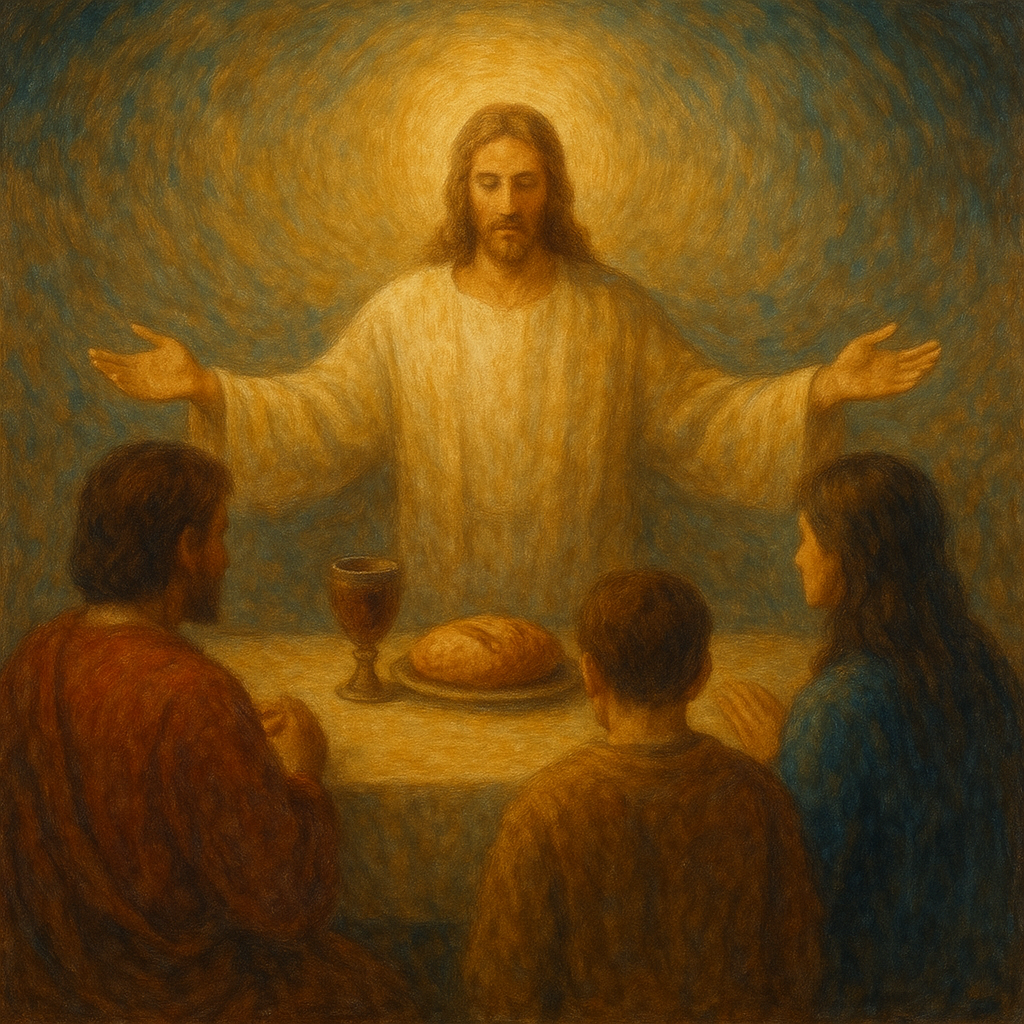
He brings bread and wine and blessing. This is the first initiation of communion, before any of the law, or tabernacle, or ark, or temple, or Hebrew priests. In the beginning, there was communion with Christ.
Christ brought the bread. What does the bread represent? We know that Jesus is the bread of life. His body was broken on the cross and through the power of His resurrection, He formed us into His new body as the Ekklesia under His Head. Not only did He birth the Ekklesia, but 1 Peter 2:24 (NLT) says, “He personally carried our sins in his body on the cross so that we can be dead to sin and live for what is right. By his wounds you are healed.” Every time you receive bread, remember that Jesus’ body was broken so that you could be made whole —so that WE could be made whole.
Christ brought the wine. What is the wine? Romans 5:9 says we’ve been made right in God’s sight by Jesus’ blood and saved from condemnation. Ephesians 1:7 says that our freedom and forgiveness have been purchased with the blood of Jesus. Hebrews 13:12 says we have been made holy by His blood. When you receive wine or grape juice (the fruit of the vine), remember that Jesus’ blood makes you right, saved, free, forgiven, and holy before your God.
As Melchizedek, Jesus emphasized and demonstrated these things hundreds of years before He was born in the flesh and broke bread with His disciples. Even after His resurrection, He had communion with His disciples. Communion is a forever practice. It’s is communing in fellowship with Yahweh through bread and wine. Even in eternity, He will set a table and invite us to have communion with Him.
Jesus sets the table and provides everything necessary, then we approach His table and receive His blessing in faith. Revelation 3:20 says if we hear His voice and invite Him into our lives, He will come in and share a meal with us. Psalm 23:5 says that He prepares a table for us in the presence of our enemies. IN THE PRESENCE OF OUR ENEMIES?! Yes, because just as Jesus provides the bread and the wine, He provides the blessing and the victory.
In Genesis 14, we see Melchizedek initiate a forever sacrament of communion, and then He blesses Abram. And then He blesses the Most High God and points out that it was the Most High God that gave Abram victory. Melchizedek makes sure that Abram knows the source of his success.
How does Abram respond to God’s provision?
He gives 10% of everything he acquired. We see the forever sacrament initiated by Christ followed by a forever response demonstrated through the father of faith, Abraham. Christ initiates communion and Abraham’s faith initiates the tithe. Abraham is our example of right response in faith.
I’ve heard a lot of teaching that tithe is old covenant. Yes, it is repeated in the rules of the old covenant, but it precedes the old covenant. It precedes circumcision. Abraham and his experience with Jesus Christ as Melchizedek was before the law. Also, Jesus didn’t do away with it. Turn to Matthew 23:23 with me. Jesus is correcting the religious leaders because they tithe but don’t operate in justice, mercy, and faith.
Matthew 23:23 NLT
“What sorrow awaits you teachers of religious law and you Pharisees. Hypocrites! For you are careful to tithe even the tiniest income from your herb gardens, but you ignore the more important aspects of the law—justice, mercy, and faith. You should tithe, yes, but do not neglect the more important things.”
Jesus says, “Yes, you should tithe, but do not neglect justice, mercy, and faith.” It’s not an “either/or” but both. Tithe only operates as holy and right from a heart of faith and a desire to honor God because He has blessed you. When we tithe we’re agreeing with Melchizedek, saying, “Blessed be God Most High, who has defeated our enemies for us.” Abraham initiated tithe as an act of worship from a heart of faith. Through the new covenant provided by Jesus, we are actually attached to promises and the promised relationship of Abraham.
Galatians 3:29 NLT
And now that you belong to Christ, you are the true children of Abraham. You are his heirs, and God’s promise to Abraham belongs to you.
So what was initiated with Abraham is restored to us through our faith relationship with Jesus. Now we continue the essential practices initiated by Melchizedek and Abraham. We receive communion and blessing and victory from Christ, and we give our tithe in faith. When we commune with Christ, He always blesses us. And we respond to Him with our tithe, 10% of what we have.
Regularly receive communion with your spiritual family, and be aware that the Righteous King, the Prince of Peace, the High Priest of the Most High God is in your midst. Jesus told us to remember Him every time we receive communion. This remembering isn’t just a looking back at what He did. It’s a remembering that He is presently participating in the communion. He brings communion and He brings the blessing and He brings the victory. We receive in faith and then we give in faith.
Make prayer, worship, and study of the Bible priorities, and add communion and tithing. My wife and I tithe not out of religious duty or obligation, but because it’s our response to Christ’s provision of communion, blessing, and victory. I know that I victoriously receive everything because the Most High God is with me and has blessed me, and my faith response is tithing.
In the past I struggled with a poverty mentality. I thought that I didn’t have enough to tithe. I use to always complain about my finances and I looked for messages from people who taught that tithing was old covenant because I thought it would clear my conscience. My behavior was a reflection of my heart. I wasn’t operating in the love language of God, which is faith, and my selfishness was actually hindering my communion with Him. If I’m unwilling to speak His language, it’s very difficult to sit at the table with Him and have an intimate conversation. Activate, practice, and grow your faith by spending time in His Word, praying, worshiping, having communion, and tithing. Let’s restore together these essential practices.
Declare this out-loud: “I am His messenger and He is always with me, for I only do that which delights His heart.”
Jesus is inviting us to the table. He provides the bread, He provides the wine, He provides the blessing, and He provides the victory. We receive communion by coming to the table and breaking bread together. He prepares, He provides, we receive and we give as our sacrificial worship. And all of this is immersed in Father’s pleasure.
Seeking His face!
Matt
Matt Neese
Wellspring.Live
Discover more from Wellspring
Subscribe to get the latest posts sent to your email.


 Wellspring